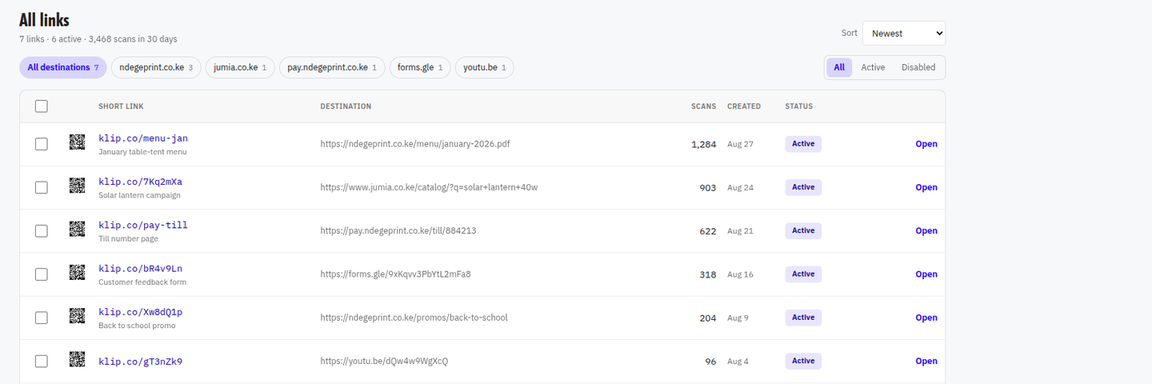
Every code in one book
Filter by where they point, sort by what is busiest, and copy or download without opening a thing. The QR is on the row, because the printed artifact is what is being managed.
Try the generator →A normal QR code has your web address baked into the pattern. When the page moves, every printed copy is dead paper. A Klip code encodes a short link instead — so the paper points at us, and we point wherever you say.
This one is static — the link is inside the pattern, so it cannot be changed or counted. Fine for a phone number, wrong for a campaign.
Most shorteners are built for links you paste. The difference shows up in the details: what the list puts first, what the customiser refuses to export, and which numbers count.
Filter by where they point, sort by what is busiest, and copy or download without opening a thing. The QR is on the row, because the printed artifact is what is being managed.
Try the generator →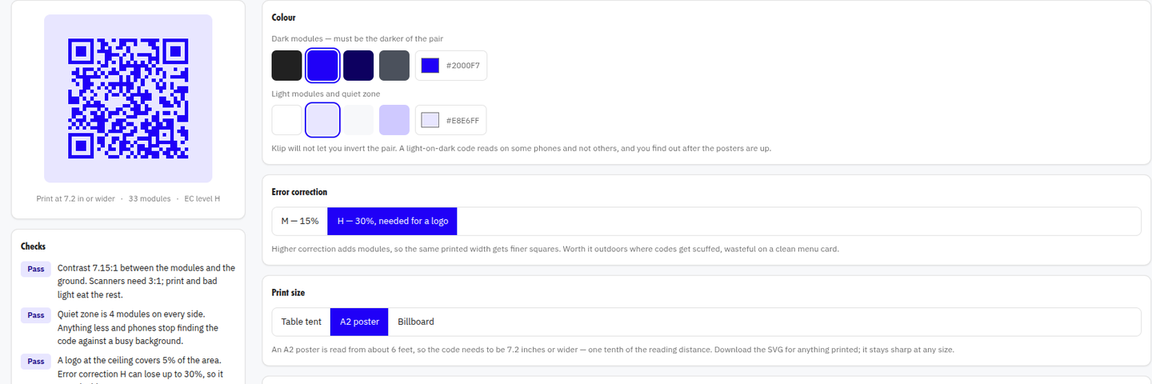
Contrast as a ratio, the quiet zone in modules, the logo as a share of area. A pair a scanner cannot read is blocked rather than discouraged.
Why codes fail →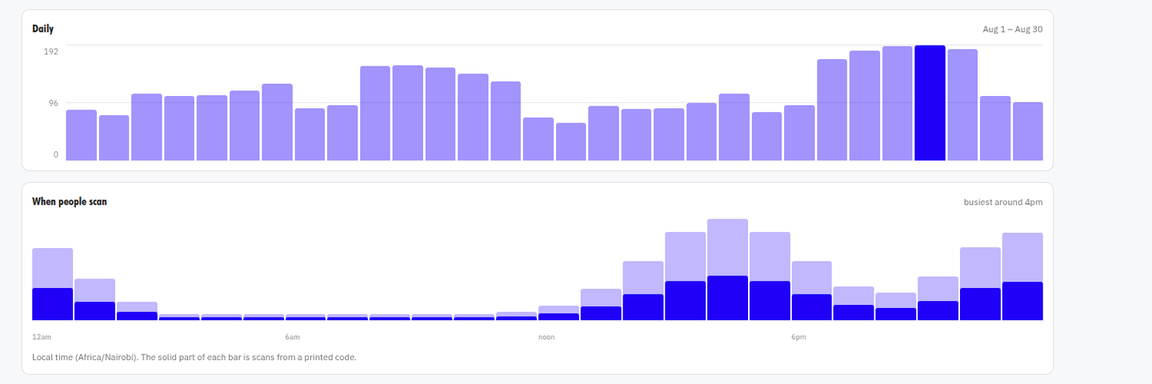
A camera and a tap are different events, and a chat app fetching a preview is neither. The solid part of every bar is the half that came off a printed code — in your timezone, not the server’s.
Dynamic vs static →Screenshots are of the real interface. The numbers in them are example data — we have not launched, so we have no customer traffic to show you.
A Klip QR code works by encoding a short link rather than your destination. A scan reaches the nearest edge location, is resolved from cache, and redirects — usually in tens of milliseconds. Changing the destination updates that lookup, so printed paper never has to change.
Free for 50 links a month, unlimited scans, and nothing between a scan and its destination on any plan.
The things people ask before they commit something to paper.
A dynamic QR code encodes a short link rather than the destination itself, so the destination can be changed later without reprinting. The printed pattern never changes. It also makes scans countable, because every scan passes through the short link before reaching the destination.
No. Links on every plan, including the free one, keep working for as long as the account exists. Plans differ on custom domains, analytics retention, branding and volume — never on whether the redirect itself works.
Yes, on paid plans. You point a CNAME at Klip, we issue and renew the certificate automatically, and your links read go.yourbrand.com instead of k.klipqr.com. Existing links keep working.
Nothing visible. The code still encodes the same short link, and the next scan resolves to the new destination, usually within a minute worldwide. This is the entire reason to print a dynamic code rather than encoding the destination directly.